Project management software for construction: 6 essential criteria for making the right choice
Project management software for construction: 6 essential criteria for making the right choice
Project management software for construction: 6 essential criteria for making the right choice

By Carl from Gro
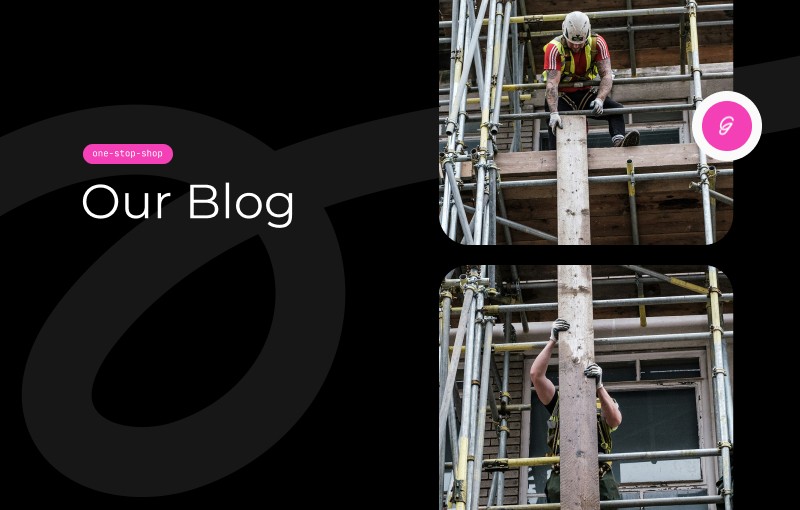
Since 2020, the supply of digital solutions dedicated to construction has exploded: the tools are finally mature enough to meet the realities of job sites. In light of all these options, how do you select THE platform that will advance your projects without slowing you down? Here are six decisive criteria highlighted by our GRO consultants. We sometimes cite popular examples — Monday, Procore, Buildertrend, Smartsheet — but the goal is not to compare these brands against each other; it’s to help you build your own selection process.
1. Product Flexibility
Ask yourself: can the software adapt to my current methods, or do I need to adjust my processes to use it?
Highly configurable solutions (e.g., Monday, Smartsheet) allow you to build your own workflows, forms, and automations.
Specialized suites (e.g., Procore, Buildertrend) come with predefined processes that suit most construction companies.
To check: level of customization of fields, reports, and permissions.
2. Accounting Integrations and Data Flows
A good tool must connect seamlessly to your financial systems (Akumba, Maestro, QuickBooks, Avantage, etc.) and to your other applications (BIM, estimation, quality control).
To check: open APIs, native connectors, bidirectional synchronization, currency and tax management.
3. Robustness and Reliability
Job sites do not tolerate service interruptions. Analyze:
Availability history (SLA) and update cadence
Cloud architecture (multi-tenant or dedicated instance?)
Backup processes and disaster recovery plan
A more "turnkey" provider often publishes uniformly tested updates, whereas a highly customizable tool requires more internal validations after each customization.
4. Total Cost of Ownership (TCO)
Look beyond the monthly license price:
Startup: implementation, data migration, configuration.
Adoption: initial training and time spent off production.
Operation: maintenance, updates, paid modules.
Scalability: extra costs related to adding users or projects.
Project these expense items over three years to fairly compare several solutions.
5. Team Adoption and Training
Even the best software fails without adoption. Think about:
Learning curve for superintendents, project managers, and administrators.
Quality of training resources (video, FAQ, support in French).
Change management plan: who trains, who supports, who governs?
The more configurable the tool, the more specific training your context requires.
6. Support and Long-Term Development
Ask yourself these questions:
Is support available 24/7 or only during business hours?
Is there a user community or a network of local partners?
Does the product have a public roadmap for new features?
Is there a marketplace to extend functionalities (APIs, modules, third-party applications)?
Conclusion
The right project management software isn’t just the one that “does everything”; it’s the one that aligns with your processes, integrates with your systems, remains reliable under pressure, stays affordable over time, gains the buy-in of your teams, and evolves with your business. Use these six criteria as an evaluation framework to compare solutions like Monday, Procore, Buildertrend, or any other platform on the market, and you will be in a position to choose the right software.
How GRO Can Help You
At GRO, we promote semi-custom: starting from a solid core (e.g., Monday) and then adapting it to your job site methods. Our services:
Comprehensive analysis of your workflows and integration needs.
Rapid configuration according to GRO best practices.
Pre-configured accounting connections (Akumba, Maestro, QuickBooks, etc.).
Training plan and change management support.
Evolving support to adjust the solution as your company grows.


#Technology, Powered by Gro!
Gro Agency 2025 - All rights reserved
#Technology, Powered by Gro!
Gro Agency 2025 - All rights reserved
#Technology, Powered by Gro!
Gro Agency 2025 - All rights reserved